
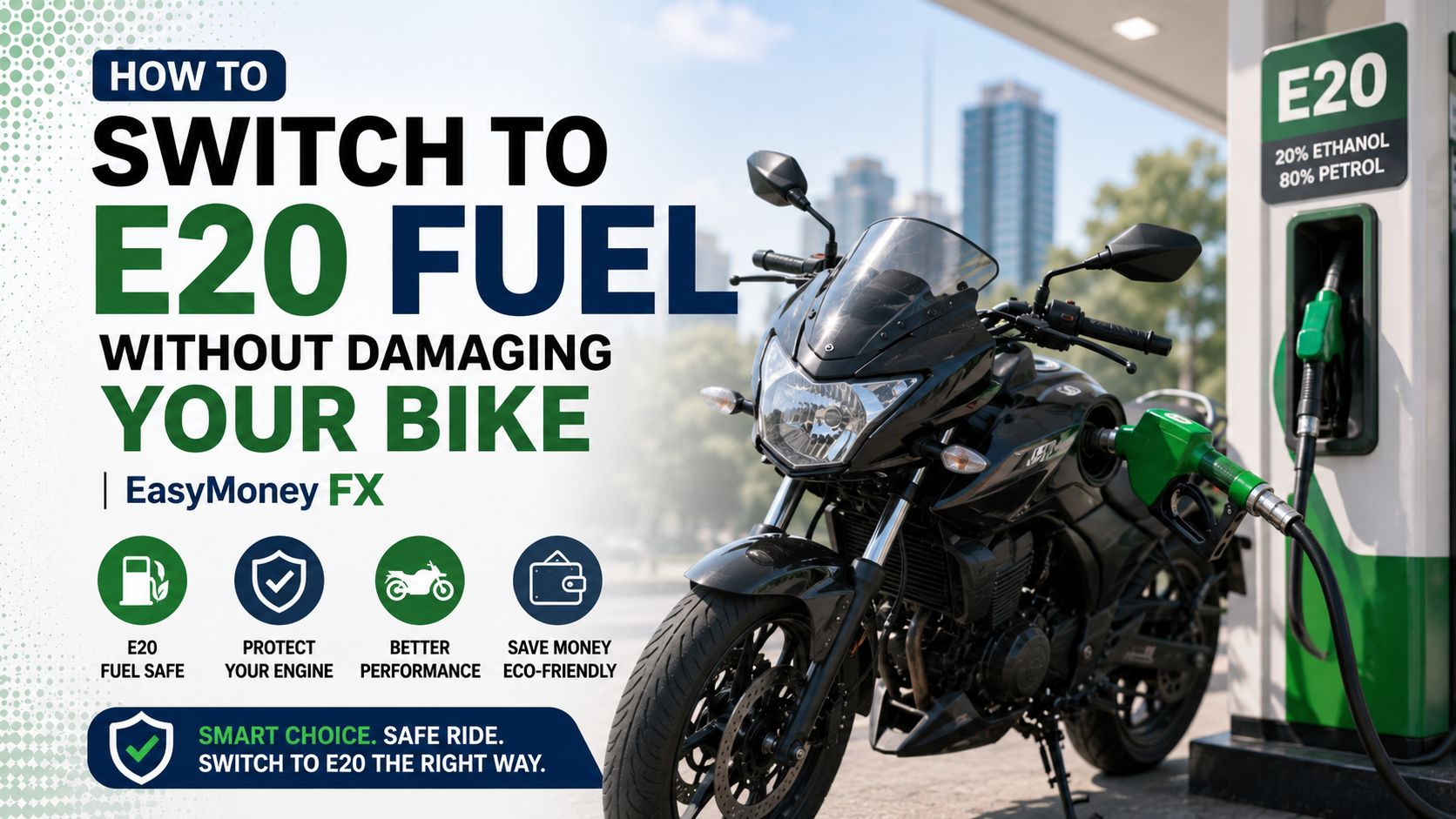
How to Switch to E20 Fuel Without Running Into Problems
E20 is arriving at more pumps across India every month, and most bike riders are going to encounter it whether they planned to or not. Knowing how to switch to E20 fuel the right way
— rather than just filling up and hoping for the best — is the difference between a smooth transition and an expensive one. The switch itself isn't complicated. What goes wrong is usually one of a few things, and all of them are avoidable. 1. Check if Your Bike Is Actually E20-Ready Before You Switch to E20 Fuel
1. Check if your bike is actually E20-ready
Don't assume — open the owner's manual or call the manufacturer's service line directly. Bikes built before 2023 vary significantly in what their fuel systems can handle, and guessing compatibility has caught more than a few riders off guard.
2. Don't jump straight from E10 to E20
Fill one tank, ride it normally, and pay attention. Notice any change in how the bike starts, pulls, or responds to the throttle before committing to the next fill. A gradual transition gives you something to compare — a sudden switch gives you nothing to go on if something feels off.
3. Shorten your maintenance intervals
E20 is harder on rubber components than E10 or pure petrol. Hoses, seals, and fuel filters are where the wear shows up first — especially on older bikes. Checking them more frequently in the first few months catches problems before they turn into replacements.
4. Don't let fuel sit in the tank
Ethanol actively absorbs moisture from the air over time. Leave E20 sitting in the tank for three to four weeks without riding and you're creating conditions for phase separation — where water and fuel stop mixing properly and the engine starts playing up. Run the bike every week or two, or drain the tank if you know it's going to sit unused.
5. Choose your pump carefully
Fuel quality varies more than people realise, and E20's tendency to absorb water makes it more vulnerable to contamination than pure petrol. Stations with high turnover and proper storage infrastructure give you more consistent fuel — and that consistency shows up directly in your mileage and engine behaviour.
6. Listen to what the bike is telling you
Harder starting, a knock that wasn't there before, hesitation mid-throttle, unexpected stalling after switching fuel — none of these are things to ride through and hope go away. They're early warnings. Acting on them early is considerably cheaper than acting on them late.
Frequently Asked Questions
How to switch to E20 fuel if my bike is old?
Check compatibility with your manufacturer before anything else. If your bike is pre-2023 with rubber fuel lines and a carburettor, it may need component upgrades before switching. Don't just fill up and observe — older bikes need a confirmed green light from the manufacturer before you switch to E20 fuel.
How to protect a bike from E20 fuel?
Keep up with maintenance more regularly than you normally would — hoses, seals, and fuel filters need checking more often. Don't let fuel sit in the tank for more than two weeks. Use a fuel stabiliser or E20 additive if the bike is going to sit unused. And where possible, fill up at stations with high turnover where the fuel is less likely to have absorbed moisture in storage.
Does E20 fuel affect a bike?
Yes, in a few ways. Mileage typically drops by 5–8?cause ethanol contains less energy per litre than pure petrol. Rubber components in older bikes can degrade faster. And if the fuel sits in the tank too long, moisture absorption can cause starting trouble and rough running. On compatible bikes, the effects are manageable — on older or incompatible ones, the impact is more significant.
