
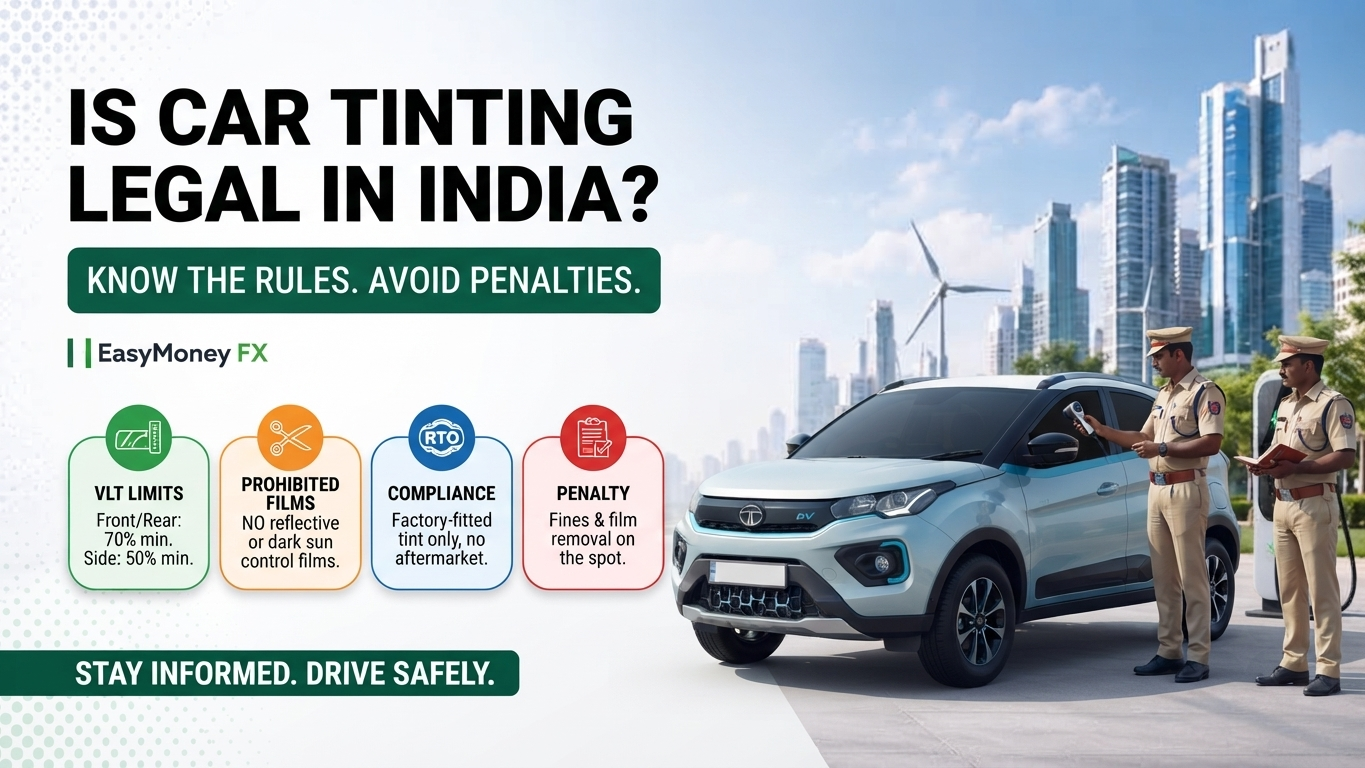
Is Car Tinting Legal in India? The VLT Rule Most Owners Get Wrong
Dark windows look great and keep the cabin cool — but most tints on Indian cars are actually illegal, and even owners who "checked the VLT" often get caught out.
What the VLT Limit Actually Is
VLT stands for Visual Light Transmission — it simply measures how much light passes through your car glass. The higher the number, the clearer the glass; the lower it is, the darker and harder to see through.
Rule 100 of the Central Motor Vehicles Rules, 1989 sets the baseline for every car in India:
|
Glass |
Minimum VLT Required |
|
Front & rear windscreen |
70% |
|
Side windows |
50% |
This is the tinted glass legal limit that applies to the glass as it comes from the manufacturer. As long as your factory glass meets these numbers, you're within the law — no extra film needed.
The Twist Most Owners Miss
Here's where confusion sets in. Many car owners believe that as long as a film's VLT rating meets the 70/50 numbers, it's legal to apply. That belief is wrong — and it's the single biggest myth around car film VLT in India.
The Real Rule
In 2012, the Supreme Court (Avishek Goenka vs Union of India) didn't just cap how dark a film could be — it banned pasting any film on windscreens or side glass, regardless of its VLT percentage. The problem isn't the darkness of the film; it's the act of adding a film to safety glass at all.
So a film sold as "70% VLT approved" is still illegal once applied — a claim that shops and installers repeat often, but that hasn't held up since the 2012 ruling.
-
Legal: Factory-tinted glass that already meets the VLT limit — nothing added afterward.
-
Illegal: Any aftermarket film, sun shade, or curtain stuck onto the glass — even clear UV films.
What Happens If You Get Caught
Traffic police carry handheld light meters and can test your glass on the spot. If the reading falls below the legal limit — or if any film is detected on safety glass at all — here's what typically follows:
-
On-the-spot removal: the film is scraped off right there, and you lose whatever you paid for it.
-
The fine: booked under Section 177 — ₹500 for a first offence, ₹1,500 for a repeat one.
-
Safety cost: dark film cuts night visibility, which is exactly why it's treated as a real safety issue, not just a paperwork one.
If you're buying a used car, check the edges of the windows for a faint film line or bubbling — that's usually a giveaway that an aftermarket tint was added.
Frequently Asked Questions
Is car tinting legal in India?
Only factory-fitted tinted glass that meets the VLT limit (70% for windscreens, 50% for side windows) is legal. Any film added after purchase is illegal under the 2012 Supreme Court ruling, regardless of its VLT rating.
What is the tinted glass legal limit in India?
The tinted glass legal limit is 70% VLT for front and rear windscreens and 50% VLT for side windows, as set under Rule 100 of the Central Motor Vehicles Rules, 1989.
Is any car film VLT rating approved as legal in India?
No. Since the 2012 court order, no aftermarket film is legal on safety glass — not even one that claims to meet the VLT limit. The ban covers films of every percentage.
What is the fine for illegal tinted glass?
It's booked under Section 177 — ₹500 for a first offence and ₹1,500 for a repeat offence. Police can also remove the film on the spot during the check.
Is factory-tinted glass within the legal limit allowed?
Yes. Factory glass that already meets the 70/50 VLT limit is fully allowed — it's only films and materials added after the car leaves the factory that are banned.
